
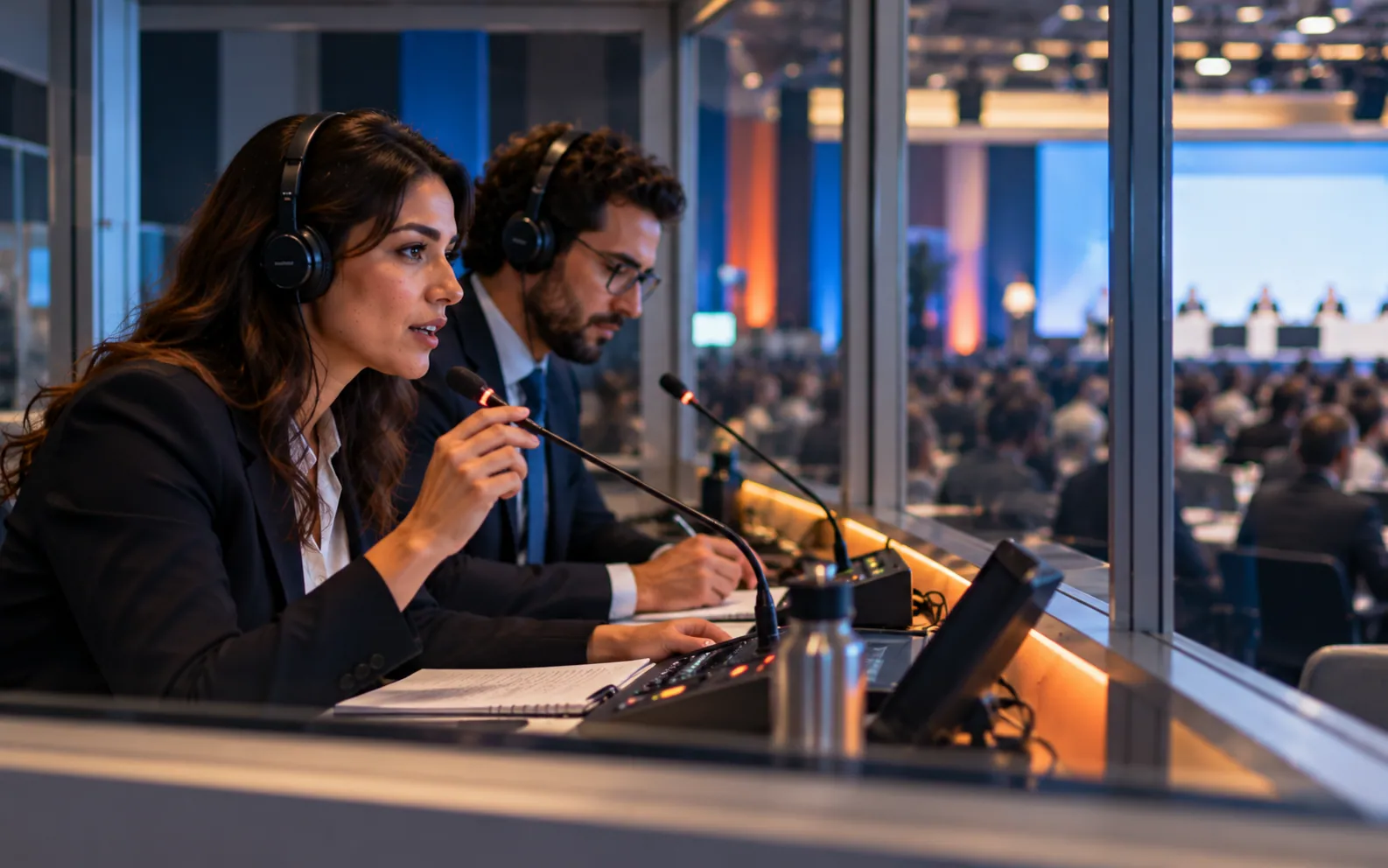
Simultaneous interpretation costs are driven by five things: the pricing model, the number of languages and interpreters, the subject matter, the equipment, and travel. Most in-person events are billed by the hour or by the day with a minimum booking, and each language needs a team of two interpreters. ZED Localization builds every quote around these factors so you can see exactly where your budget goes.
Simultaneous interpretation keeps global conferences, high-level meetings and multinational events running in real time, with no pauses for translation. Because no two events are alike, pricing can vary widely. Here is how each cost driver works and how to get the most from your interpretation investment.
How Simultaneous Interpretation Is Priced
Providers generally use one of three billing models, chosen to match the length and format of the event.
| Pricing model | Typical use | What to know |
|---|---|---|
| Per minute | Short engagements such as virtual meetings | You pay for the time actually used, which suits brief sessions. |
| Hourly | Standard meetings and single-session events | Minimum bookings are common, often three to four hours. |
| Daily | Multi-day conferences | Daily rates are usually discounted compared with hourly billing. |
The Main Cost Drivers
1. Language Pairs and Team Size
Language combinations have a direct effect on price.
- Common pairs cost less. English and French, for example, have a large pool of qualified interpreters.
- Rare combinations cost more. A pair such as Japanese and Russian draws on a much smaller pool.
- Each language needs a team of two. Simultaneous interpreters work in pairs and rotate roughly every 20 to 30 minutes to keep accuracy high.
- Every added language multiplies the setup. Each one brings another interpreter team, another channel and often another booth, so costs rise quickly as languages are added.
2. Interpreter Expertise and Preparation
Not every event needs a specialist, but some cannot run without one.
- Generalist interpreters suit most business events, from company meetings to industry panels.
- Specialized interpreters handle legal, medical and technical content. They bring certification, subject knowledge and field-specific glossaries, which usually comes at a premium.
- Preparation time for reviewing materials and attending briefings may add a fee, but it is one of the most reliable ways to protect quality on the day.
3. Equipment and Technical Support
Equipment needs scale with the size and format of the event.
- Basic setups: portable headsets and transmitters work well for small in-person events.
- Large-scale events: expect soundproof booths, receivers for every attendee and dedicated technicians.
- Remote simultaneous interpretation (RSI): interpreters work through platforms such as Interprefy or KUDO. This lowers equipment costs but depends on a stable platform and reliable connections.
For smaller virtual sessions, video remote interpretation can be a practical alternative to a full RSI setup.
4. Logistics and Travel
Where your interpreters come from affects the final number. Local interpreters keep expenses low, while international assignments add flights, accommodation and per diems. Hybrid events can blend on-site interpreters with remote colleagues to balance quality and budget.
Is Simultaneous Interpretation the Right Fit?
Simultaneous interpretation is the most resource-intensive mode, so it is worth confirming you need it. It is the right choice when an event has a fixed agenda, several languages or a large audience, and when pausing for interpretation would double the length of each session. For smaller meetings, negotiations or site visits with one or two languages, consecutive interpretation, where the speaker pauses and the interpreter follows, often delivers the same clarity with fewer interpreters and little or no equipment. A good provider will tell you which mode fits your event rather than defaulting to the most expensive option.
Questions to Ask Your Interpretation Provider
Before you sign, get clear answers to these questions:
- What is the rate structure, and is there a minimum booking?
- How many interpreters will each language pair require?
- Are specialized interpreters available for technical or industry-specific content?
- What equipment is included, and will a technician be on site?
- What are the policies for cancellations and last-minute changes?
A provider that answers all five without hesitation is giving you the transparency you need to budget with confidence.
How to Make Your Interpretation Budget Go Further
- Book early. Securing interpreters ahead of peak conference seasons improves availability and helps lock in rates.
- Share materials in advance. Glossaries, slide decks and agendas shorten preparation time and improve accuracy.
- Use a hybrid model. Place on-site interpreters for your key languages and cover the rest remotely.
- Bundle recurring events. If you run annual conferences or regular board meetings, ask about package pricing.
Why Event Organizers Choose ZED Localization
ZED Localization manages simultaneous interpretation from start to finish, so you are not coordinating interpreters, equipment and technicians separately.
- Vetted, certified interpreters across a wide range of languages and specialized fields.
- End-to-end support, from equipment rental to real-time technical assistance during the event.
- Transparent pricing tailored to the scale and needs of each event, with every cost itemized.
Explore ZED's full range of interpretation services, or request a detailed quote for your next event.