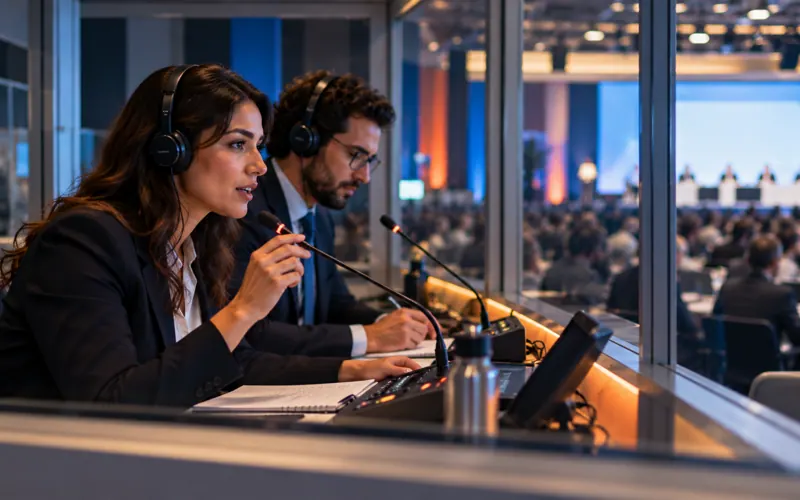

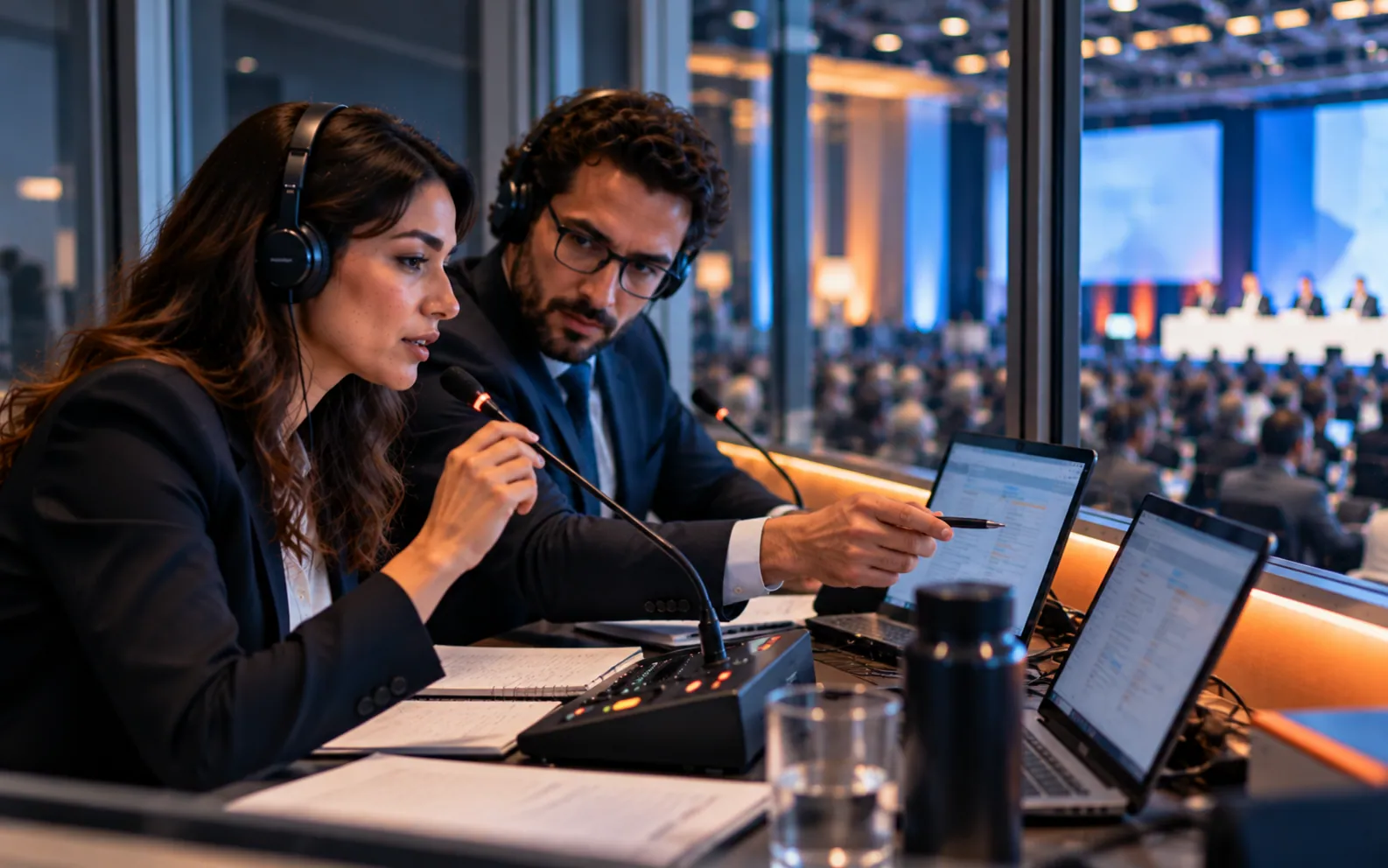
Most simultaneous interpretation assignments longer than about 30 minutes need two interpreters per language, taking turns every 20 to 30 minutes. One interpreter can cover a short presentation or a brief, isolated meeting, but half-day and full-day events require a team to keep accuracy from slipping. ZED Localization staffs every event to this professional standard.
The One-Interpreter Misconception
"Can one interpreter cover the whole event to save money and keep things consistent?" It is one of the most common questions event planners ask, and it sounds reasonable at first. In practice, simultaneous interpretation places heavy cognitive demands on the interpreter. Depending on the event's format and length, a second interpreter is not a luxury or an upsell. It is what keeps communication accurate from the first session to the last.
Why Two Interpreters Are the Professional Standard
In interpretation, redundancy is not waste. It is protection. You would not want a single surgeon handling a long, complex operation without support, or one pilot flying a long-haul flight alone. The same principle applies in the interpretation booth.
Consider the workload. Conference speakers often talk at roughly 100 to 150 words per minute, and many go faster. Over a 30-minute turn, that means an interpreter listens to, processes and delivers somewhere between 3,000 and 4,500 words in another language, in real time, with no chance to revise. That is the length of a substantial report, handled live.
To sustain quality, interpreters work in pairs and switch roughly every 20 to 30 minutes. While one interprets, the other is far from idle:
- Following the speech to catch figures, names and terms
- Researching unfamiliar terminology in real time
- Taking notes on numbers and key points to support the active interpreter
- Monitoring sound quality and the meeting's protocol
Staffing Guide by Event Type
Use this guide as a starting point for your planning. Exact needs depend on the agenda, the subject matter and the number of languages.
| Event type | Length or schedule | Recommended staffing |
|---|---|---|
| Simultaneous: short presentation | Under 30 minutes | One interpreter may be sufficient |
| Simultaneous: conference or summit | Half day or full day | Two interpreters per language, at minimum |
| Accompanied: business meeting | Brief, isolated meeting | One interpreter |
| Accompanied: meetings, tours or exhibitions | Full day | Two interpreters to prevent fatigue |
Accompanied interpretation, used for business meetings, tours and exhibitions, depends heavily on your schedule. A single short meeting may need only one interpreter, while a full day of back-to-back sessions calls for two.
How to Plan Staffing for Your Event
A few details make it much easier to staff an event correctly. Share these with your provider early:
- The full agenda, including session lengths, breaks and any parallel tracks
- Every language needed, for both the speakers and the audience
- The subject matter, especially technical, legal or medical content that needs specialists
- The format, whether in person, remote or hybrid, and the size of each room
- Any movement between locations, such as site visits, tours or exhibition floors
With this information, ZED Localization can recommend the right number of interpreters, the right mode and the right equipment, and explain the reasoning behind each choice.
The Hidden Cost of Understaffing
A second interpreter can look like an extra expense, but it is a strategic investment. Interpreter fatigue leads to omissions, errors and miscommunication, and in business negotiations or diplomatic settings, those mistakes can be costly. That is why major international organizations and established conferences staff interpretation in teams as a matter of routine.
The International Association of Conference Interpreters (AIIC) reflects this in its professional standards. As a general rule, a simultaneous team includes at least two interpreters per language and per booth, and an interpreter should not work alone in a simultaneous booth. Exceptions are limited and depend on the length and nature of the meeting.
Professional Standards Protect Your Event
If a previous provider placed one interpreter on a full-day event, the arrangement fell short of professional practice. Qualified interpreters avoid conditions that put accuracy at risk, and reputable providers do not recommend them.
ZED Localization treats interpretation as a core part of an event's success, from multinational conferences to small business meetings. Following industry standards protects your investment and keeps every audience fully engaged. Learn more about ZED's interpretation services and on-site interpreters, or book pre-scheduled interpretation for your next event.
When you plan your next multilingual event, ask one question: is the risk of miscommunication worth the savings of one fewer interpreter? Staffing correctly is not an extra expense. It is the foundation of clear communication and the best insurance against costly misunderstandings. Contact ZED Localization to plan the right team.